Requirements
| Document Title |
Product System Requirements |
| Document Owner |
Harry Roache-Wilson |
| Document Responsibility |
Harry Roache-Wilson |
| Document Identifier |
3 |
| Document Status |
draft |
| Part of product |
product |
| Part of release |
1.0 |
Scope of this document
This document specifies requirements and traceability for a demo application that uses the robust embedded systems engineering (RESE) methodology.
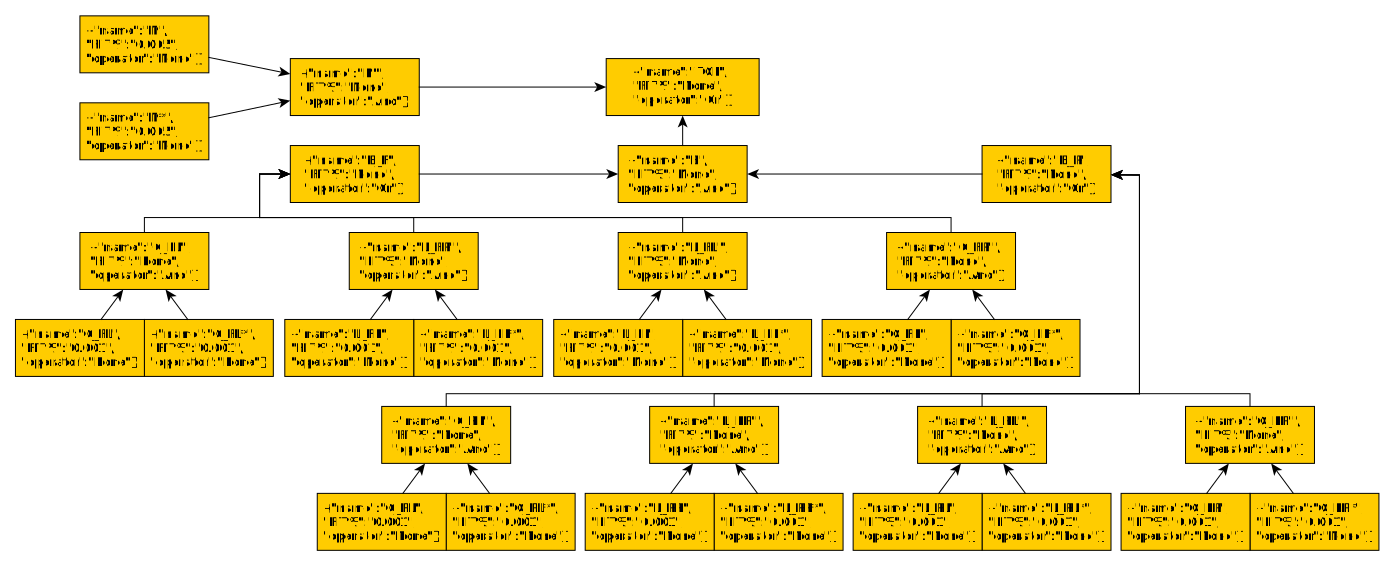
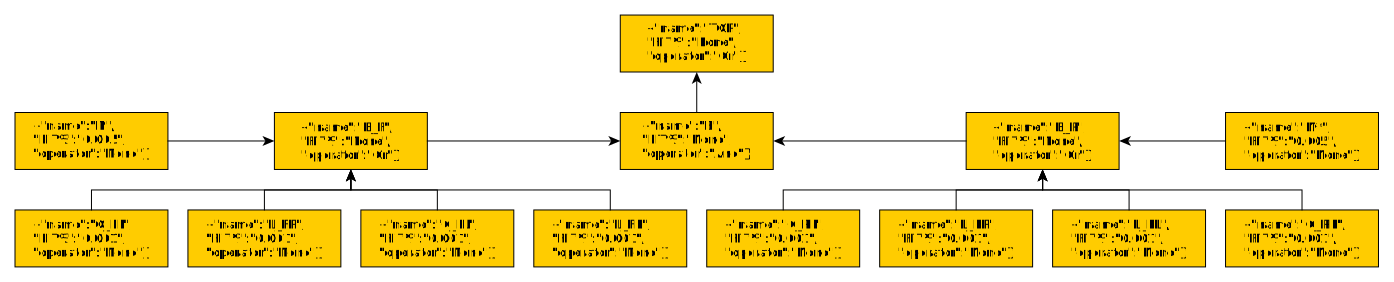
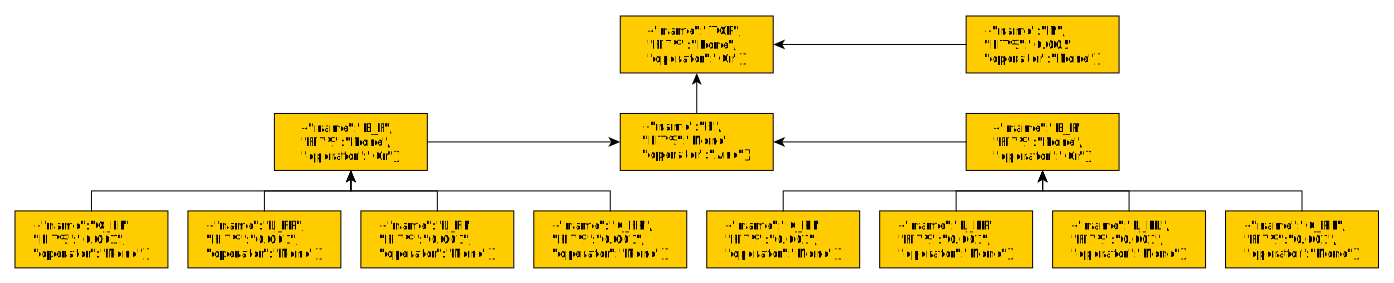
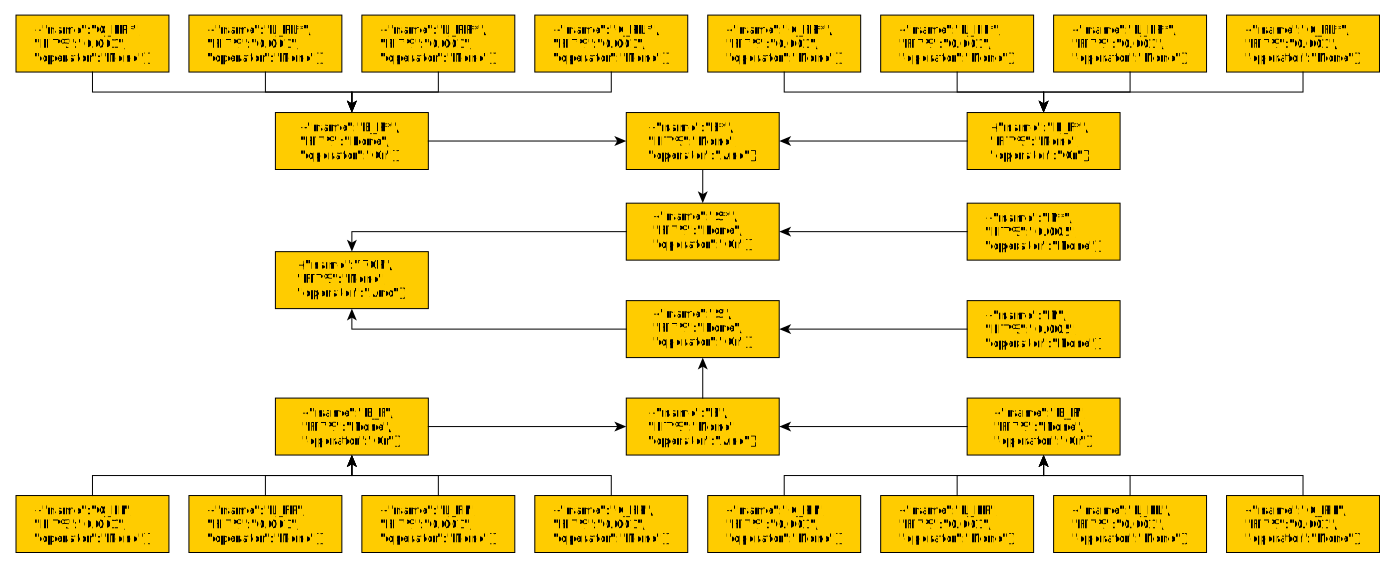
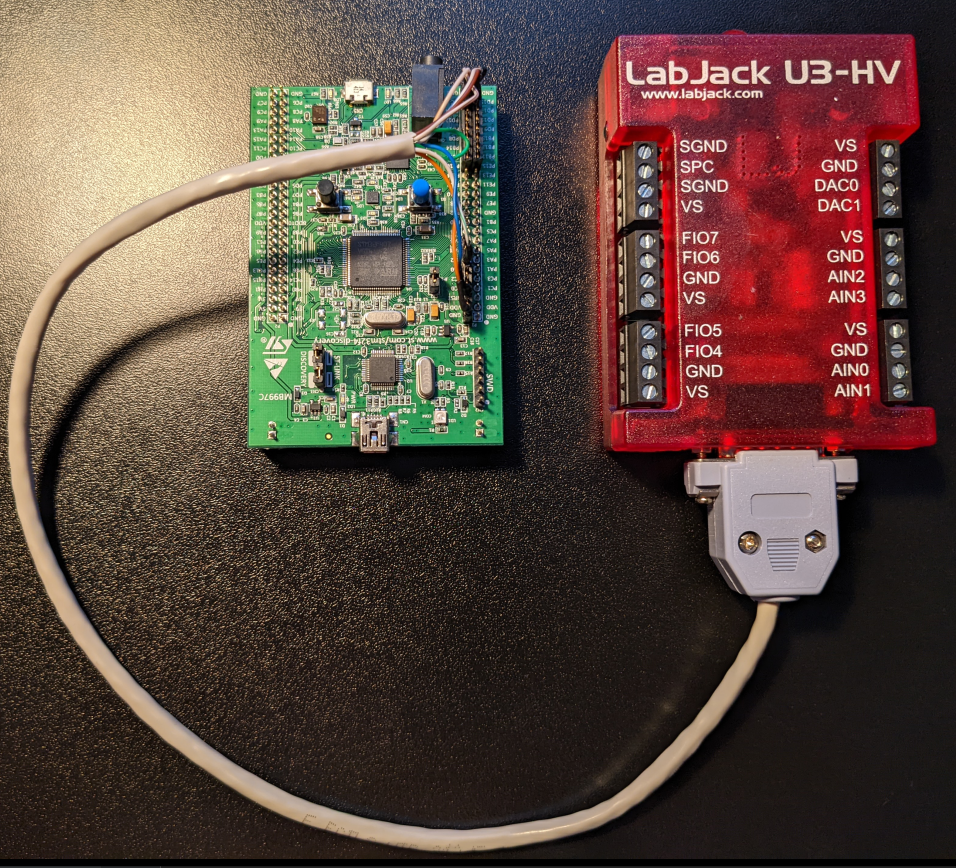
Traceability is achieved by an automated suite of hardware in the loop integration tests. Test results are dynamically updated in the traceability matrix.
Conventions to be used
Requirements guidelines
Each requirement has a unique identifier starting with the prefix “R”. Any words or phrases in all-caps refer to a formally defined word or phrase. Formal definitions are found in the Glossary.
Requirements quality
Requirements identification
The key words "SHALL", "SHOULD", "MAY" in this document are to be interpreted as follows. Note that the requirement level of the document in which they are used modifies the force of these words.
- SHALL: This phrase, or the adjective "REQUIRED", means that the definition is an absolute requirement of the specification.
- SHOULD: This word, or the adjective "RECOMMENDED", means that there may exist valid reasons in particular circumstances to ignore a particular item, but the full implications must be understood and carefully weighed before choosing a different course.
- MAY: This word, or the adjective "OPTIONAL", means that an item is truly optional.
Acronyms and abbreviations
All technical terms used throughout this document – except the ones listed here – can be found in the Glossary.
| Term |
Description |
| HIL |
Hardware in the loop |
| HMI |
Human-machine interface |
| LED |
Light emitting diode |
| RS |
Requirement specification |
| SYS |
System |
Requirements Specification
System Requirements
Functional Requirements
| @RS_SYS_F001 |
Product shall provide visual feedback to indicate availability |
| Publication Status |
published |
| Description |
|
| Rationale |
|
| Verification Method |
Decomposition. @RS_LED_F002, @RS_LED_NF001 |
| Supporting Material |
|
Non-Functional Requirements
| @RS_SYS_NF001 |
Product shall be able to operate in environments below 30 degrees celcius without degradation |
| Publication Status |
Published |
| Description |
An example of an environmental requirement that is hard to verify in an automated manner. |
| Rationale |
|
| Verification Method |
Manual test |
| Supporting Material |
|
| @RS_SYS_NF002 |
Product shall consume less than 10mW of power under max load |
| Publication Status |
published |
| Description |
|
| Rationale |
|
| Verification Method |
Inspection |
| Supporting Material |
|
HMI Software Requirements
Functional Requirements
| @RS_HMI_F001 |
User shall be able to turn LEDs on and off with one button press |
| Status |
published |
| Description |
|
| Rationale |
|
| Verification Method |
Automatic test |
| Supporting Material |
|
| @RS_HMI_F002 |
User shall be able to reset the device with one button press |
| Status |
published |
| Description |
|
| Rationale |
|
| Verification Method |
Automatic test |
| Supporting Material |
|
Non-Functional Requirements
LED Software Requirements
Functional Requirements
| @RS_LED_F001 |
Product LEDs shall display a lighting animation that uses all four LEDs |
| Status |
published |
| Description |
|
| Rationale |
|
| Verification Method |
Automatic test |
| Supporting Material |
|
| @RS_LED_F002 |
Product shall display a lighting pattern on startup without user input |
| Status |
published |
| Description |
|
| Rationale |
|
| Verification Method |
Automatic test |
| Supporting Material |
|
Non Functional Requirements
| @RS_LED_NF001 |
Product shall display a lighting pattern in less than 1 second after startup |
| Status |
published |
| Description |
|
| Rationale |
|
| Verification Method |
Automatic test |
| Supporting Material |
|
Without requirements and design, programming is the art of adding bugs to an empty text file.
― Louis Srygley